By the Thai Gold Massage team · Updated October 2026 · 8 min read
Thai massage is a traditional hands-on therapy from Thailand, known as Nuad Thai, that combines rhythmic pressure, assisted stretching and gentle rocking movements. It’s usually done on a mat or low bed with you in loose, comfortable clothing and normally without oil. UNESCO added it to its list of the world’s intangible cultural heritage in 2019.
That’s the short answer. The rest of this guide explains how it works, how it differs from other massages, what a session feels like, who it suits and where you can try it in Lisbon.
| Also called | Nuad Thai, nuad boran (“ancient massage”), traditional Thai massage |
| Origin | Thailand, developed over many centuries |
| What the therapist does | Presses, stretches, compresses and rocks the body, using hands, thumbs, elbows, knees and feet |
| Clothing | Usually loose, comfortable clothes |
| Oil | Usually none in the traditional style (Thai oil massage is a separate, softer option) |
| Typical length | 60 or 90 minutes |
| Pace and feel | Rhythmic, with firm pressure and stretches; can be deep, shouldn’t be painful |
| Cultural status | UNESCO Intangible Cultural Heritage of Humanity, 2019 |
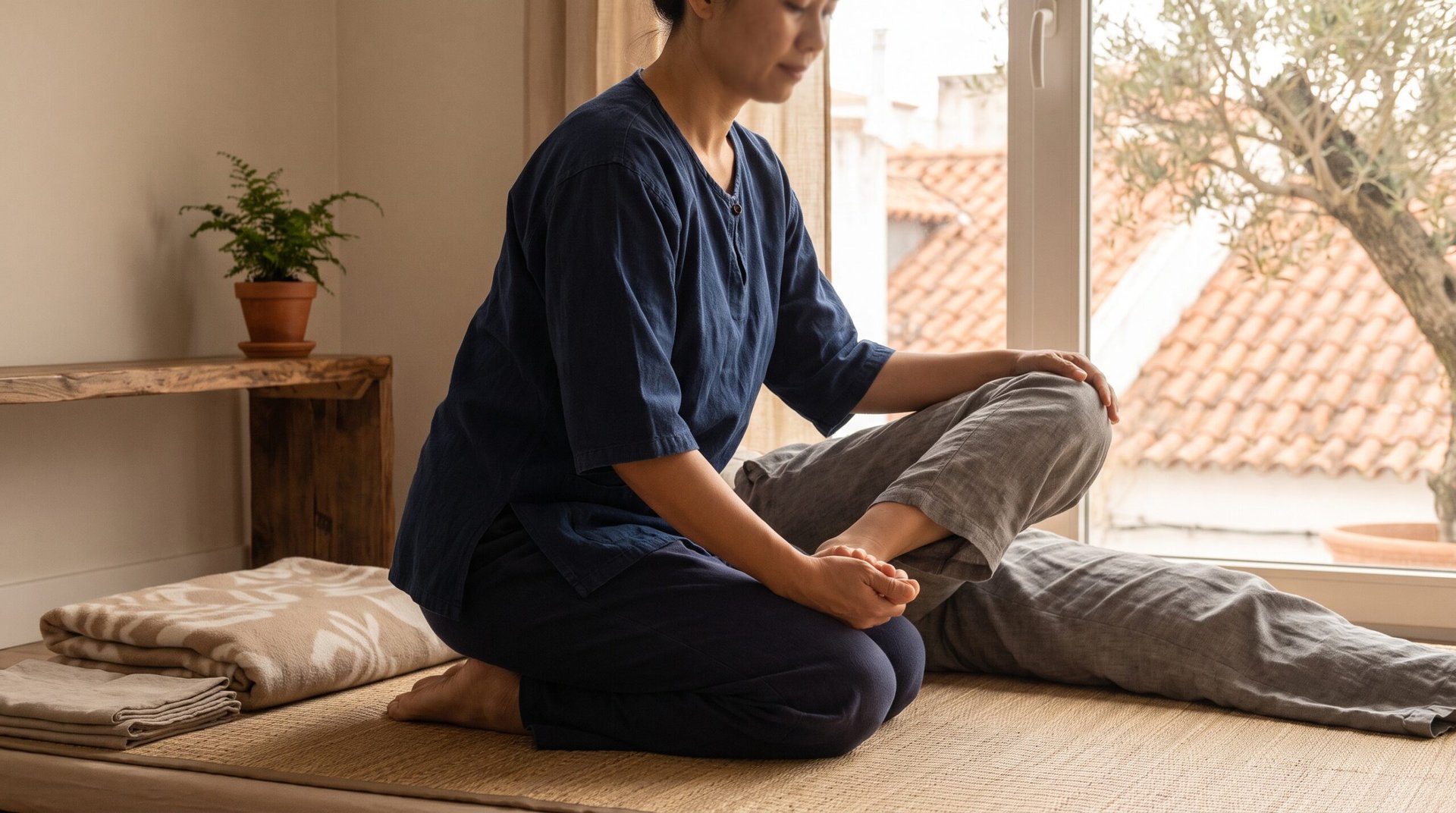
Traditional Thai massage is bodywork that mixes pressure, stretching and movement. A therapist works along the whole body in a steady rhythm. Instead of rubbing muscles with oil, they usually compress, press, pull and gently move your limbs into stretches. People often describe it as “assisted yoga”, because you’re guided into positions without having to do the work yourself.
UNESCO describes Nuad Thai as a “non-medicinal” manual therapy, rooted in Thailand’s traditional healthcare, in which practitioners use their hands, elbows, knees and feet. It’s also described as growing out of village self-care, where local healers eased people’s aches and pains, before it became a more formal system.
In Thai tradition, the body has energy pathways called Sen lines, and blockages along them are believed to cause discomfort. Therapists apply pressure along these lines. This is a traditional framework, sometimes compared with meridians in Chinese medicine, though they come from different systems. You don’t need to believe in it to enjoy the massage. Modern descriptions of what happens in a session are simpler: pressure, stretching and relaxation.
| Thai traditional | Swedish / oil relaxation | Deep tissue | |
|---|---|---|---|
| Main technique | Pressure, compression, assisted stretching | Long, flowing strokes with oil | Slow, firm pressure on tense muscles |
| Clothing | Loose clothing | Undressed and covered with towels | Usually undressed and covered |
| Oil | Usually none | Yes | Usually yes |
| Your role | Moved into stretches | Lie still | Lie still |
| Feels like | Active, rhythmic | Soft, calming | Firm, focused |
Not sure which one suits you? At Thai Gold Massage we offer Thai traditional, Thai oil, deep tissue and other styles. Our services page lists them all.
For a full walkthrough, read what happens at your first Thai massage in Lisbon. And see our guide to Thai massage etiquette for what to wear and say.
Thai massage grew from Indian and Buddhist healing traditions mixed with local Thai knowledge. The physician Jivaka Kumar Bhaccha, said to have treated the Buddha, is honoured as the “father doctor” of Thai medicine, but historians treat his story as tradition rather than confirmed history. The best-documented milestones are later: the 19th-century inscriptions of medical and massage knowledge at Wat Pho in Bangkok under King Rama III, and the modern revival and teaching of the practice in Thailand. Read the full history of Thai massage for more.
People mainly choose Thai massage for relaxation and stress relief, a feeling of looser muscles, relief from everyday tension and a chance to slow down. A note on the evidence: research on Thai massage is limited, and many claims made by practitioners go further than clinical studies show. Massage in general can help with relaxation, temporary relief of aches and mood, but Thai massage is not a cure for medical conditions. See our guide to Thai massage benefits for more detail.
Thai massage is generally well tolerated by healthy adults, but it includes stretching and firm pressure, so it isn’t right for everyone. Speak to a doctor or healthcare professional first, and tell your therapist, if you:
You should never feel you have to put up with pain. Say “softer” or stop the session at any point.
Prices vary by studio. At Thai Gold Massage, a 60-minute Thai traditional massage is €60, a 60-minute Thai oil massage is €50, 60-minute massages range from €50 to €65, and 90-minute massages from €75 to €90. See the services page for current prices.
We’re a Thai massage studio near Rossio and Restauradores: R. das Portas de Santo Antão 15 1º, 1150-264 Lisboa. Open every day from 10:00 to 20:00, and walk-ins are welcome. If you’re visiting, our guide to Thai massage in Lisbon for tourists shows how to fit a session into your trip. If you’re comparing options, read how to choose a Thai massage therapist and how to choose the best spa in Lisbon.
A transparent note: we run Thai Gold Massage, so we’re writing about our own field. We’ve kept claims to what’s documented and linked our sources below.
Thai massage is a traditional therapy from Thailand that uses rhythmic pressure, stretching and gentle movement. It’s usually done on a mat or low bed in loose clothing, without oil.
Not in the traditional style. You stay in loose, comfortable clothing. For a Thai oil massage you undress to your comfort level and are covered with towels.
It can feel deep in tight areas, but it shouldn’t be painful. Tell the therapist if the pressure is too strong and they’ll adjust it.
Thai massage uses pressure, compression and assisted stretching, usually without oil and in loose clothing. Swedish massage uses long, flowing strokes with oil and is more passive.
Most sessions last 60 or 90 minutes. 60 minutes is a good start for a first session.
Yes. You don’t need experience or flexibility. Tell your therapist it’s your first time so they can explain what to expect.
Book online, message us on WhatsApp or call +351 920 024 277.


Beauty best spa in lisbon Classic energetic guides Massage ORGANIC OIL relaxing
Relaxing Massage
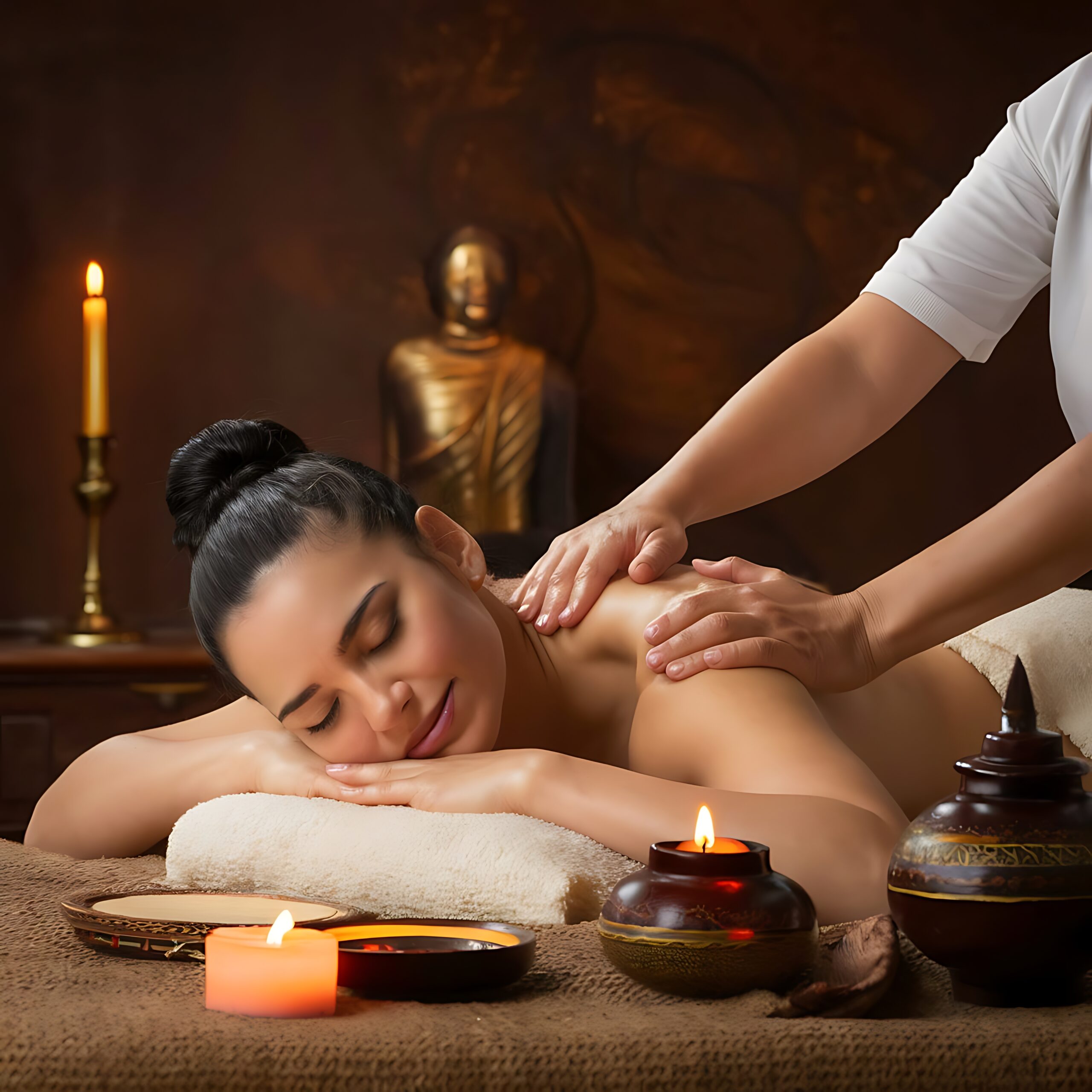
Thai Oil Massage
Relaxation Room
Candle Massage
Hot Stone Massage
Treatment Massage
thaigoldmassage@gmail.com
+351 920 024 277
R. das Portas de Santo Antão 15 1º, 1150-264 Lisboa, Portugal
© 2026 Thai Gold Massage